A serious roof leak can allow water to move quickly beyond the original point of entry. Rain may spread beneath tiles, soak into insulation and travel along structural timbers before appearing on a ceiling or wall. The longer the roof remains exposed, the greater the area that may be affected.
Emergency roof repairs aim to control this process. They can close or cover the vulnerable area, secure displaced materials and reduce continued water ingress until the roof is fully restored. For property owners in South Cerney, Gloucestershire, arranging prompt professional attention can help prevent a sudden defect from becoming a more extensive problem.
How an Emergency Roofing Response Can Reduce Damage
The appropriate response depends on the cause of the leak, the condition of the roof and whether the weather allows permanent work to be completed. A professional roofer will first assess the immediate problem and then decide how best to make the affected area weather-secure.
Identifying Where the Water Is Entering
The internal damp patch does not always sit directly below the external defect. Water can enter higher up the roof and follow the underlay, battens or timbers before finding a route into the room below.
A roofer may need to inspect a wider area around the visible problem, including:
- Tiles or slates and their fixings
- Ridge, hip and verge details
- Chimney and wall flashing
- Valleys and drainage channels
- Flat roof seams and edges
- Roof vents and other penetrations
Finding the actual entry point prevents attention from being focused on the wrong section.
Closing Gaps in the Roof Covering
Missing, cracked or badly displaced tiles can leave the underlay and battens exposed to direct rainfall. Even a relatively small opening may admit a considerable amount of water during prolonged or wind-driven rain.
An emergency repair can replace or secure the affected covering where conditions permit. Restoring the correct overlap helps rainwater continue down the roof rather than passing underneath it.
Making Exposed Areas Temporarily Weather-Secure
A permanent repair is not always possible during strong wind, heavy rain or when the full extent of the damage requires further investigation. In these circumstances, temporary weatherproofing may be used to protect the opening.
This does not remove the need for a lasting repair. Its purpose is to reduce further exposure until the correct materials and working conditions are available.
Securing Loose Roofing Components
Storm damage can loosen more than the single tile or slate that first becomes noticeable. Surrounding coverings, flashing and ridge materials may also have moved.
Securing unstable components can stop the damaged area from becoming larger. It also allows the roofer to assess whether fixings or supporting battens have weakened beneath the visible surface.
Protecting the Supporting Roof Structure
Roof timbers and battens are not intended to remain repeatedly wet. Continued water entry can lead to staining, distortion and gradual deterioration within the supporting structure.
Promptly reducing the flow of water helps limit additional moisture exposure. Accessible timbers should also be inspected so that any deterioration already present can be included in the follow-up repair.
Reducing Saturation of Insulation
Insulation can absorb and retain moisture after a roof leak. A wet area may extend beyond the point where water is dripping because the material can distribute moisture laterally.
Emergency roof repairs help prevent more rain from reaching the insulation. The affected roof space can then be assessed to establish how far the water has travelled and whether further attention is necessary.
Limiting Damage to Ceilings and Walls
Ceilings and wall finishes often show the first obvious internal signs of a roof leak. Staining may develop slowly, or water may begin dripping during severe weather.
Stopping the incoming water reduces the amount reaching these surfaces. However, a ceiling that is bulging, sagging or heavily saturated should not be disturbed, as the affected material may be unstable.
Addressing Failed Flashing and Junctions
The areas where a roof meets a chimney, wall or adjoining section are particularly dependent on accurate weatherproofing. If flashing lifts, splits or separates, rain can be directed beneath the covering.
Emergency work may involve securing or temporarily protecting the failed junction. A permanent repair should then restore the detail correctly rather than relying on a superficial coating over the damaged area.
Checking Flat Roof Damage
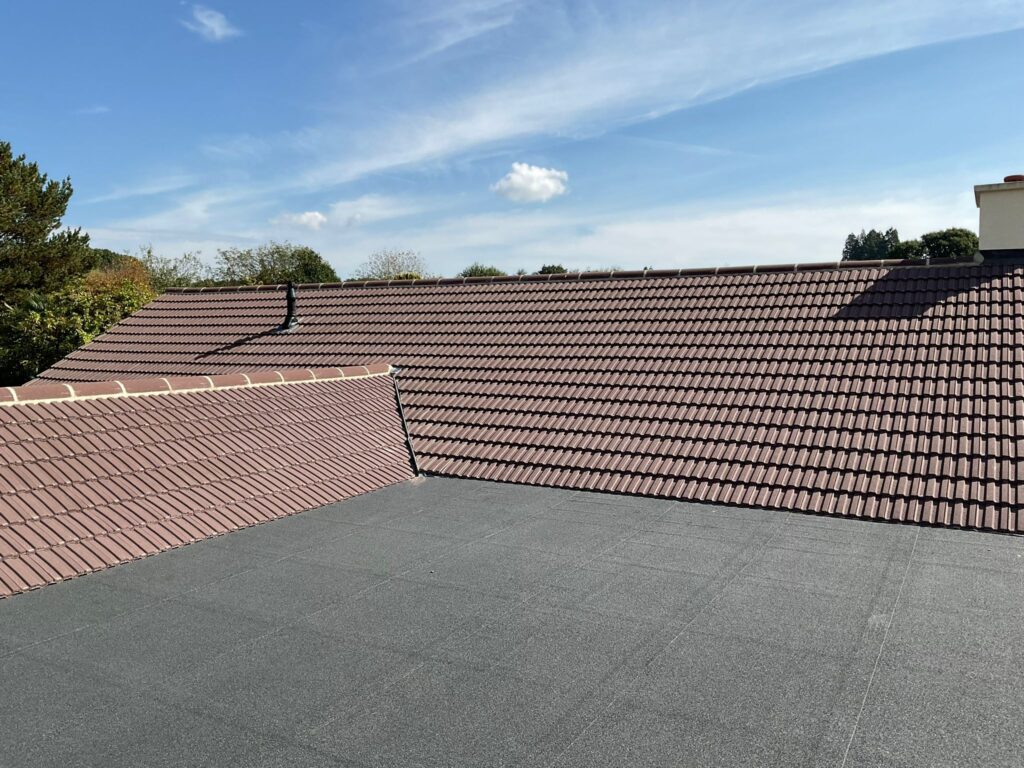
A puncture, split seam or lifted edge can compromise the continuous waterproof layer of a flat roof. Water may then spread between the covering and the deck, making the visible leak only one sign of a larger affected area.
A roofer will examine the membrane and surrounding surface for softness, movement and trapped moisture. Localised damage may be repairable immediately, while wider deterioration can require temporary protection followed by planned work.
Why Speed and Accuracy Both Matter
Responding quickly is important, but the repair must still address the right defect. Covering the first visible gap without checking the surrounding roof may leave another route for water entry.
An experienced roofer balances the need for prompt action with careful diagnosis. This helps ensure that the emergency work controls the immediate leak without overlooking related damage.
What to Do Before the Roofer Arrives
Homeowners should not climb onto a wet or damaged roof. Safe action should be limited to the interior of the property.
Where practical:
- Move belongings away from the affected area
- Place a container beneath dripping water
- Note when and where the leak appears
- Photograph visible damage from a safe position
- Keep away from bulging or unstable ceiling material
Clear information about the leak and recent weather can assist the initial inspection.
Temporary Repairs Should Be Followed Up
Emergency weatherproofing is sometimes only the first stage. Once conditions improve, the roof should be checked again and the underlying defect repaired permanently.
This follow-up may involve renewing tiles, underlay, battens, flashing or sections of flat roof covering. Completing the permanent work prevents a temporary solution from remaining in place longer than intended.
Conclusion
Emergency roof repairs can limit further water damage by reducing active water entry, securing loose materials and protecting exposed parts of the roof. Their effectiveness depends on locating the true defect and checking whether moisture has already spread into concealed components.
LJ Roofing South Cerney provides professional emergency roof repairs in South Cerney, Gloucestershire. If your roof has developed a sudden leak or serious weather-related damage, contact our team to arrange a prompt assessment and suitable response.
Call us on: 01285 702 775
Click here to find out more about LJ Roofing South Cerney.
Click here to complete our contact form and see how we can help with your roofing needs.