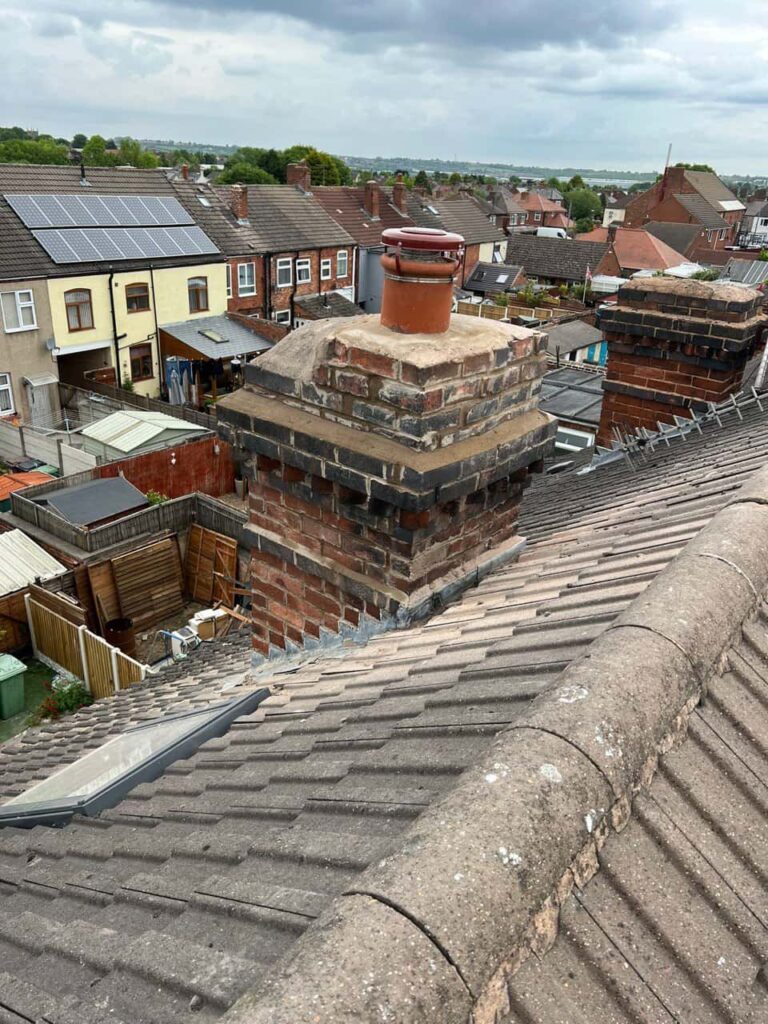
Periods of bad weather can expose weaknesses in a roof that may previously have gone unnoticed. Strong winds can disturb tiles and flashing, while persistent or heavy rainfall can find its way through even relatively small defects. Once the weather has passed, it is important to establish whether the roof has suffered damage and, more importantly, which problems require the most urgent attention.
For homeowners in South Cerney, Gloucestershire, acting promptly after severe weather can help prevent an isolated roofing defect from developing into more extensive deterioration. At LJ Roofing South Cerney, we assess the overall condition of the roof, identify the source and extent of any damage, and determine which repairs should be prioritised to restore effective protection.
Why Bad Weather Can Reveal Existing Roof Weaknesses
Roof damage after poor weather is not always caused entirely by one particular event. In some cases, wind and rain expose weaknesses that have been developing gradually.
A tile fixing may already have deteriorated, mortar may have weakened or flashing may have begun separating from adjoining materials. Under ordinary conditions, these defects might not create an obvious problem. Strong winds or prolonged rainfall can be enough to turn them into active faults.
This is why a post-weather roof inspection should consider the wider condition of the roof rather than simply looking for one obviously damaged component.
1. Active Roof Leaks Need Prompt Attention
If water is visibly entering the property, identifying its source should be a priority.
Water penetration indicates that the roof covering or one of its associated details is no longer providing effective protection in that area. Continued rainfall can allow additional moisture into the roof structure.
Signs can include:
- Water dripping internally
- New damp patches on ceilings
- Moisture around chimney areas
- Dampness within the loft
- Water staining that becomes larger after rainfall
- Wet areas around roof junctions
The position of an internal stain does not necessarily identify the exact external defect. Water can travel along roofing materials or structural components before becoming visible inside.
Professional investigation is therefore important before repairs begin.
2. Missing Roof Tiles Should Be Investigated
Strong winds can dislodge tiles completely, leaving sections of the roofing system more exposed.
A missing tile may appear to be a relatively small defect when viewed from ground level, but the opening it creates can allow rainfall to reach materials that are not intended to remain directly exposed.
Missing tiles can also indicate that neighbouring tiles or fixings have been disturbed.
Replacing the obvious missing tile may therefore be only part of the work required. The surrounding area should also be checked for movement and damage.
3. Loose and Slipped Tiles Can Be Just as Important
A tile does not need to have fallen from the roof to require attention.
Tiles that have slipped from their normal position can create openings through which wind-driven rain may penetrate. Loose tiles may also move further during subsequent periods of bad weather.
Warning signs can include:
- Uneven rows of tiles
- Tiles sitting lower than neighbouring ones
- Visible gaps in the covering
- Sections appearing lifted
- Tile fragments around the property
Where several tiles have moved together, it is particularly important to investigate why.
Widespread slipping may indicate deterioration beyond one individual tile.
4. Damaged Flashing Can Allow Water Into Vulnerable Junctions
Roof flashing is used around areas where different surfaces and structures meet.
These junctions require careful weatherproofing because they can otherwise become vulnerable to water penetration.
Bad weather can expose weaknesses in flashing around features such as:
- Chimneys
- Roof junctions
- Abutments
- Other changes within the roof covering
If flashing has lifted, cracked or separated, rainfall may be able to enter behind it.
Because these defects can sometimes be difficult to identify from the ground, professional inspection can be valuable when leaks appear after heavy rain.
5. Ridge and Hip Areas Deserve Attention
Ridges and hips occupy exposed positions on many roofs and can therefore experience considerable weathering.
Strong winds may reveal deterioration within existing fixings or surrounding materials. Problems in these areas should not be overlooked simply because the main roof slopes appear intact.
Signs of concern can include visible movement, displaced components or fragments appearing below the roof after severe weather.
A professional roofer can determine whether the issue is localised or whether adjoining sections also require attention.
6. Broken Tiles Should Not Be Ignored
Cracked or broken tiles may remain in position, making them less noticeable than missing ones.
However, damaged tiles can no longer be assumed to provide the same protection as sound roofing materials.
Heavy weather may enlarge existing cracks or cause weakened sections to break away.
Where broken tiles are identified, the surrounding roof should also be checked. Damage is not always confined to the most obvious tile, particularly after strong winds.
7. Chimney-Related Roof Defects Need Careful Assessment
Chimneys create several junctions with the surrounding roof, making them important areas to inspect when water penetration develops after bad weather.
The problem may relate to surrounding flashing, adjoining roof coverings or other weathered details rather than the chimney itself.
Because several components meet within a relatively small area, accurately identifying the source of water penetration is particularly important.
Repairing the wrong component may leave the actual route of water entry unresolved.
What If the Roof Looks Fine From the Ground?
Not all weather-related roofing problems are easy to see.
A roof may appear largely unchanged from ground level while containing:
- Slightly displaced tiles
- Cracked materials
- Lifted flashing
- Small openings
- Damaged fixings
- Localised defects around roof junctions
Internal warning signs can therefore be just as important as visible external damage.
If new dampness or staining appears after bad weather, it is sensible to have the roof assessed even when there is no obvious missing tile.
Water Ingress Can Spread Beyond the Original Defect
One reason roof leaks deserve timely attention is that water does not necessarily remain directly beneath the point where it enters.
Once moisture passes through the external covering, it can travel along internal materials before becoming visible.
This means a relatively small roofing defect can affect a larger internal area if it remains unresolved.
The priority should therefore be finding and repairing the actual entry point rather than treating only the visible signs indoors.
Why Temporary Symptoms Can Be Misleading
Some roof leaks appear only during particular weather conditions.
For example, water penetration may occur when rain is driven from a certain direction but disappear during lighter rainfall. This does not mean the problem has resolved itself.
Instead, it can indicate that a particular joint, tile or flashing detail becomes vulnerable under more demanding conditions.
Intermittent leaks should therefore still be investigated.
Several Problems May Need to Be Prioritised Together
After particularly poor weather, a roof may contain more than one defect.
There could be a slipped tile on one slope, damaged flashing elsewhere and deterioration around a ridge at the same time.
Professional assessment allows these issues to be prioritised according to their condition and their potential to allow further deterioration.
Generally, areas actively allowing water into the roofing system, exposed sections and loose components require particularly prompt consideration.
Once immediate weaknesses are identified, other necessary repairs can be addressed as part of a coordinated approach.
Previous Roof Repairs Should Be Checked
Bad weather can also expose weaknesses around older repair areas.
A previous repair may have performed effectively for a long period but surrounding roofing materials can continue ageing.
If a new leak develops close to an earlier repair, it should not automatically be assumed that exactly the same defect has returned.
The surrounding roof needs to be assessed to identify what has actually changed.
Why Repeated Leaks Need a Wider Investigation
If a roof repeatedly leaks after periods of bad weather, continually repairing individual visible defects may no longer be enough.
Recurring problems can suggest that:
- Several roofing components are deteriorating
- The roof covering is becoming increasingly vulnerable
- Previous repairs have addressed symptoms rather than the cause
- Multiple areas are reaching a similar stage of wear
- A broader section requires attention
At this stage, looking at the roof as a complete system becomes particularly important.
Should You Wait for Another Rainfall to See What Happens?
Once visible damage or internal water penetration has been identified, waiting for another period of bad weather provides little benefit.
Roofing defects rarely improve by themselves.
A loose tile can move further, an opening can admit additional water and already weakened materials can deteriorate further when exposed repeatedly.
Prompt assessment allows the condition of the roof to be understood before another spell of severe weather tests the same vulnerable areas.
Professional Inspection Helps Find the Root Cause
The most obvious defect is not always the source of the problem.
For example, water appearing beneath one section of the roof may have entered higher up before travelling internally.
Professional roof assessment therefore involves looking at how the roof is constructed and how water could be moving through it.
At LJ Roofing South Cerney, the aim is to identify the underlying cause before recommending repair work. This helps avoid unnecessary repeat repairs and ensures attention is directed towards the area actually responsible for the problem.
When Localised Roof Repairs May Be Sufficient
Bad weather does not automatically mean that extensive roofing work is required.
If the roof is generally in sound condition and damage is limited to a specific area, targeted repairs may be entirely appropriate.
Examples could include isolated slipped or damaged tiles, a localised flashing defect or another clearly contained problem.
The important consideration is whether the surrounding roofing materials remain serviceable and stable.
A professional assessment can distinguish between an isolated weather-related defect and a symptom of wider deterioration.
When Wider Roof Problems Need Consideration
Sometimes severe weather does not create the underlying problem; it simply reveals how much the roof has already deteriorated.
If inspection identifies widespread tile movement, numerous damaged areas, recurring leaks or deterioration across several roof components, repairing one isolated section may not provide the most appropriate long-term answer.
In these circumstances, the overall condition and remaining serviceability of the roof should be considered.
The purpose of a thorough inspection is to establish the extent of the problem rather than automatically assuming either a minor repair or more substantial work is required.
What Homeowners Can Safely Look For
After bad weather, homeowners can observe the property from safe ground-level positions and check internal areas for obvious changes.
Things worth noting include:
- New ceiling stains
- Damp patches
- Visible missing tiles
- Pieces of roofing material on the ground
- Uneven-looking sections of roof
- New water marks within the loft
- Changes around chimney or roof junction areas
- Problems that become apparent during rainfall
There is no need to climb onto the roof to investigate these signs. Professional roofers have the appropriate methods and experience to inspect difficult-to-access areas safely and thoroughly.
Good Repairs Should Address More Than the Visible Symptom
A lasting roof repair depends on understanding why the defect occurred.
If a tile slipped because its fixing has deteriorated, simply repositioning it without considering the fixing does not fully address the issue. Similarly, repeatedly treating an internal damp patch does nothing to prevent water entering through the roof.
Effective roofing repairs focus on restoring the weatherproofing function of the affected area.
That requires diagnosis first and repair second.
Regular Attention Can Reduce Future Weather-Related Problems
Bad weather cannot be prevented, but vulnerable roofing defects can sometimes be identified before they become active leaks.
Keeping an eye on the general condition of tiles, flashing, ridges and other exposed areas can help highlight deterioration earlier.
This is particularly useful after severe weather, when existing weaknesses may have changed noticeably.
Professional attention at the appropriate stage can prevent a manageable defect from being repeatedly exposed to further wind and rain.
Why Experienced Roof Repairs Matter
Roofing is made up of interconnected components rather than a collection of completely separate materials.
Tiles, flashing, ridges, junctions and supporting elements all contribute to keeping the property protected from the weather.
For this reason, successful repair work requires an understanding of how these components interact.
At LJ Roofing South Cerney, we assess both the immediate defect and the surrounding roof so that repairs can be based on the actual cause and condition of the affected area.
Conclusion
After bad weather, the roofing problems requiring attention first are those involving active water ingress, missing or loose tiles, exposed areas, damaged flashing and other defects that could allow further deterioration. However, the most visible problem is not always the only one, which is why a proper assessment of the surrounding roof is important.
For homeowners in South Cerney, Gloucestershire, LJ Roofing South Cerney provides professional roof inspections and repairs designed to identify the cause of weather-related problems and restore the affected areas appropriately. If your roof has started leaking or you have noticed damage following poor weather, arranging a professional assessment can help establish what needs attention and prevent a relatively localised problem from becoming more extensive.
Call us on: 01285 702 775
Click here to find out more about LJ Roofing South Cerney.
Click here to complete our contact form and see how we can help with your roofing needs.